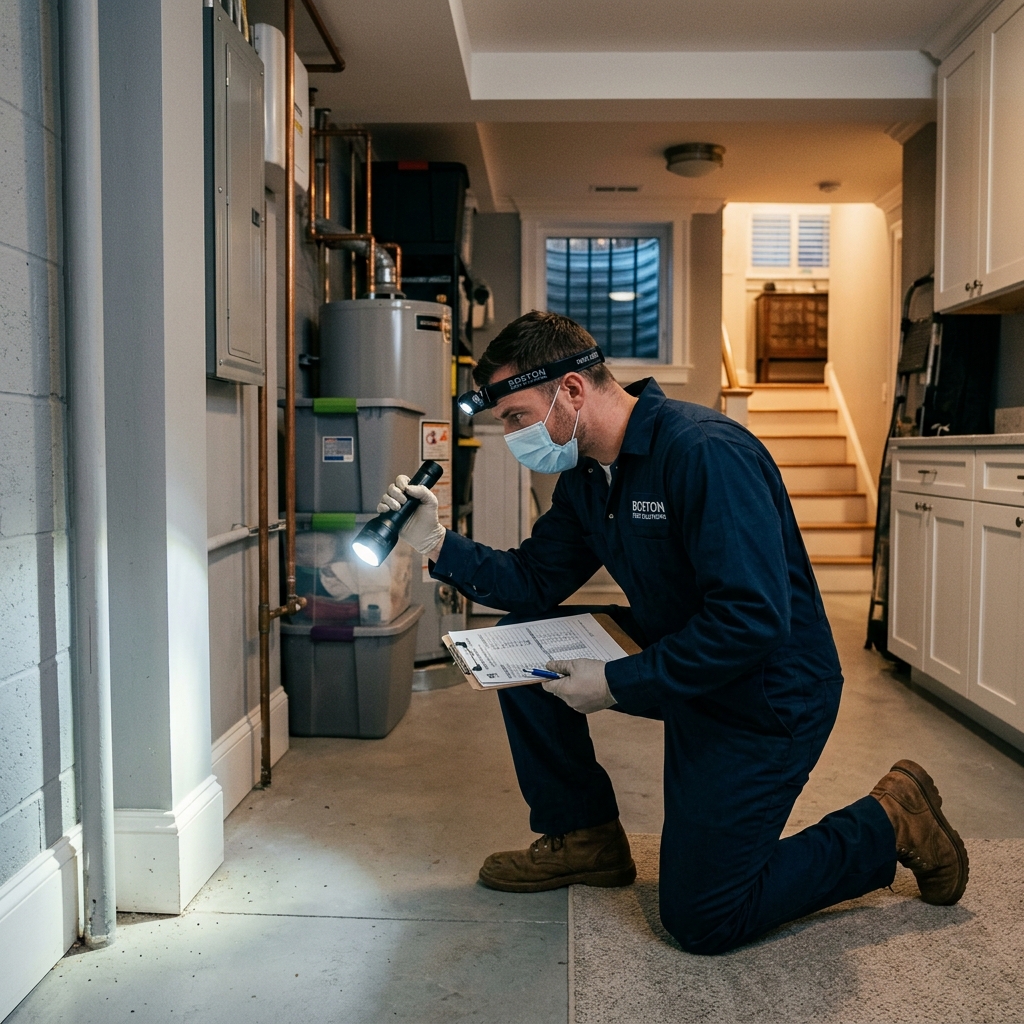

Winter in Boston brings more than just snow and cold winds. It drives mice indoors looking for warmth and food. As temperatures drop, these unwanted guests find their way into homes and businesses across Greater Boston, from Beacon Hill to Dorchester.
The problem is bigger than you might think. Recent pest control data shows that Boston ranks among the top 20 cities in America for rodent activity. Property owners in neighborhoods like Allston, Brighton, and Jamaica Plain report increased mouse sightings each fall and winter.
Knowing how to spot mice early can save you thousands in damages and protect your family's health. Let's break down the warning signs and what action you should take.
Droppings in Unusual Places
Mouse droppings are usually the first sign of an infestation. These small, dark pellets look like grains of rice and appear where mice travel and feed.
Check your kitchen cabinets, especially under the sink. Look behind appliances like your stove and refrigerator. Mice also leave droppings in pantries, along baseboards, and inside storage boxes.
Fresh droppings appear dark and moist. Old ones turn gray and crumble when touched. Finding fresh droppings means you have an active problem right now.
Many folks ask if a few droppings mean a big problem. The answer is usually yes. Where you see one mouse, there are likely more hiding. A single female mouse can have 5 to 10 litters per year, with each litter containing 5 to 6 babies.
Strange Sounds at Night
Mice are nocturnal creatures. They come out when your house goes quiet.
Listen for scratching sounds in your walls, ceilings, or floors after dark. You might hear scurrying in the attic or behind kitchen cabinets. Some people describe it as a light rustling or tapping sound.
The sounds often get louder during winter months. That's when more mice seek shelter from Boston's harsh weather. Buildings in older neighborhoods like the North End and South Boston are particularly vulnerable due to aging infrastructure and small gaps in foundations.
Pay attention to where the sounds come from. Mice create nests close to food sources. If you hear activity near your kitchen, that's your red flag.
Gnaw Marks on Food Packaging and Structures
Mice have teeth that never stop growing. They gnaw constantly to keep them trimmed.
Check your pantry for torn packages. Cereal boxes, pasta bags, and chip packages are common targets. You might notice small holes chewed through cardboard or plastic containers.
Look for gnaw marks on wooden furniture, baseboards, and door frames. Mice also chew electrical wiring, which creates serious fire hazards. The Boston Fire Department has linked several residential fires to rodent damage of electrical systems.
Fresh gnaw marks appear light in color. Older marks turn darker over time. The size of the marks can tell you what you're dealing with. Mouse gnaw marks are about 1/8 inch wide, smaller than rat damage.
Grease Marks Along Walls and Baseboards
Mice are creatures of habit. They follow the same paths repeatedly.
As they travel, their oily fur leaves dark smudge marks along walls and baseboards. These grease marks, also called rub marks, appear most often in high-traffic mouse routes.
Check the lower parts of your walls where they meet the floor. Look behind furniture and in corners. The marks might seem faint at first but become more obvious over time.
These paths usually lead to their nesting areas or food sources. Following the trails can help you identify entry points and problem areas.
Odd Pet Behavior
Your cat or dog might notice mice before you do.
Pets often stare at walls, paw at baseboards, or show unusual interest in specific areas. Dogs might bark at seemingly nothing. Cats become fixated on particular spots in your home.
This behavior isn't random. Pets can hear and smell mice that remain hidden from you. Their heightened senses pick up on rodent activity well before visible signs appear.
Some people wonder if getting a cat solves mouse problems. While cats can catch individual mice, they rarely eliminate entire infestations. Professional help is usually necessary for complete removal.
What Attracts Mice to Boston Properties
Understanding what draws mice helps prevent future problems.
Food availability tops the list. Mice need only a tiny amount of food daily. Crumbs on counters, pet food left out, and unsealed pantry items attract them.
Boston's older housing stock provides plenty of entry points. Mice squeeze through holes as small as a dime. Gaps around pipes, cracks in foundations, and openings around doors give them easy access.
Clutter offers perfect hiding spots. Stacks of newspapers, cardboard boxes, and packed storage areas create ideal nesting sites.
The Health Risks You Cannot Ignore
Mice carry diseases that threaten human health.
Hantavirus, salmonella, and leptospirosis spread through mouse droppings and urine. You don't need direct contact to get sick. Breathing dust contaminated with mouse waste can transmit diseases. Learn more about these serious risks in our Hantavirus Prevention Guide.
Mice also bring other pests into your home. Ticks, fleas, and mites hitch rides on rodents. This compounds your pest problems significantly.
Children and elderly family members face higher risks from mouse-borne illnesses. Their immune systems are more vulnerable to infections.
Professional Help Makes the Difference
DIY methods rarely solve serious mouse infestations.
Store-bought traps and poisons might catch a few mice but miss the root problem. Professional pest control identifies entry points, nesting areas, and the full extent of infestations.
For comprehensive pest solutions in the Greater Boston area, pestcontrolboston.us offers specialized rodent control services backed by years of local experience. Their team understands the unique challenges Boston properties face, from triple-deckers in Somerville to historic brownstones downtown. Similarly, bedbugsboston.us provides expert treatment for multiple pest issues, recognizing that mouse problems sometimes occur alongside other infestations. Both services use integrated pest management approaches that address current problems while preventing future invasions.
Professional exterminators use commercial-grade products not available to consumers. They also provide warranties and follow-up services to ensure complete elimination.
Prevention Steps That Actually Work
Sealing entry points is your first defense.
Use steel wool and caulk to fill gaps around pipes and cables. Install door sweeps on exterior doors. Repair damaged screens and seal cracks in your foundation.
Keep food in airtight containers. Glass or heavy plastic works better than cardboard or thin plastic bags. Clean up spills immediately and don't leave dirty dishes overnight.
Remove clutter from basements, attics, and storage areas. Store items in sealed plastic bins rather than cardboard boxes. Keep firewood at least 20 feet from your building.
Trim tree branches that touch your roof. Mice use overhanging branches as highways into upper floors. Keep shrubs trimmed away from your foundation.
Cost Considerations for Boston Residents
Professional mouse removal costs vary based on infestation severity.
Initial inspections typically run $100 to $200 in the Boston area. Treatment costs range from $300 to $600 for moderate infestations. Severe cases requiring multiple visits and extensive exclusion work can exceed $1,000.
Compare this to potential damages. Mice destroy insulation, contaminate food, and damage structures. Electrical fires from chewed wiring can cost tens of thousands in damages.
Many homeowners insurance policies don't cover rodent damage. Prevention and early intervention save money long-term.
When to Call for Help
Don't wait for a major infestation to develop.
Call professionals when you spot droppings, hear scratching sounds, or see actual mice. Early intervention stops small problems from becoming major headaches.
If you've tried DIY methods for two weeks without success, bring in experts. Continuing failed approaches wastes time and money while mice multiply.
Call immediately if you smell strong ammonia odors. This indicates a large population or long-standing infestation requiring professional treatment.
Seasonal Patterns in Boston
Mouse activity peaks during fall and winter months.
September through February sees the highest influx of mice seeking indoor shelter. Boston's cold winters make heated buildings irresistible to rodents.
Spring and summer bring different challenges. Mice already inside breed rapidly during warmer months. Outdoor mice may venture inside seeking water during dry spells.
Year-round vigilance prevents problems. Don't assume winter is the only risky season.
Frequently Asked Questions
How quickly can mice multiply in my home?
A single female mouse produces 5 to 10 litters annually with up to 6 babies each time. Babies reach sexual maturity in just 6 weeks. This means a small problem can explode into a major infestation within months without intervention.
Can mice climb stairs and reach upper floors?
Yes, mice are excellent climbers. They easily scale stairs, pipes, and rough vertical surfaces. Upper-floor apartments in Boston triple-deckers are just as vulnerable as ground-floor units. Mice also enter through roof gaps and overhanging tree branches.
What smells keep mice away naturally?
Peppermint oil, cayenne pepper, and ammonia are commonly suggested but provide limited effectiveness. While mice dislike these smells, they rarely prevent determined rodents from entering homes with food and shelter. Professional exclusion methods work much better than smell deterrents.
How do I clean up after mice safely?
Never sweep or vacuum mouse droppings as this spreads disease particles into the air. Wear gloves and spray droppings with disinfectant first. Let them soak for five minutes, then wipe up with paper towels. Seal waste in plastic bags and wash your hands thoroughly afterward.
Are mice more common in old Boston buildings or new construction?
Older buildings typically have more entry points due to settling foundations and aging materials. However, new construction isn't immune. Mice exploit gaps around new utility installations and temporary openings during building. Both old and new properties need proper exclusion measures and regular inspections.
Dealing with Mice in Your Boston Home?
Don't let a small problem become a full infestation. Connect with a licensed Greater Boston exterminator through our free inspection service.
Get a Free Inspection →